Music On Feed
Fundamentally fixing music on Facebook feed posts and unlocking new sharing formats that drive 5 million+ new posts a day.
The Problem
Music is the biggest creative tool across Stories and Reels — a powerful lever for original sharing. Yet on Facebook feed posts, music was used on less than 1.5% of posts. The data made the under-utilization clear, but the experience itself explained why.
Adding music to an image post would silently convert it into an 8-second, 720p video — degrading the media quality without the user realizing. Music was treated as a media-level attribute, meaning a user could add a different song to each photo in a single post. This broke attribution standards and created a disjointed consumption experience for viewers.
The music tool was buried below the fold in a ranked composer toolbar, and deep in the editing funnel — making it easy to miss. Worst of all, cross-posting an Instagram post with music to Facebook stripped the music entirely, generating thousands of user reports and post deletions.
Research & Alignment
My PM, content design partner and I deep-dived on this broken experience and quickly identified a large opportunity. We partnered with user research and data science to build the case.
Research found that users expected to add music (similar to Instagram) but many didn't know the feature existed. Data science estimated significant headroom to grow music usage given its low adoption on feed versus other formats.
To supplement our insights, we ran a scrappy test — recruiting an engineer to quickly implement an 'Add music' chip on media. We saw a 30%+ spike in posts. With this data in hand, we got alignment from leads to start the project.
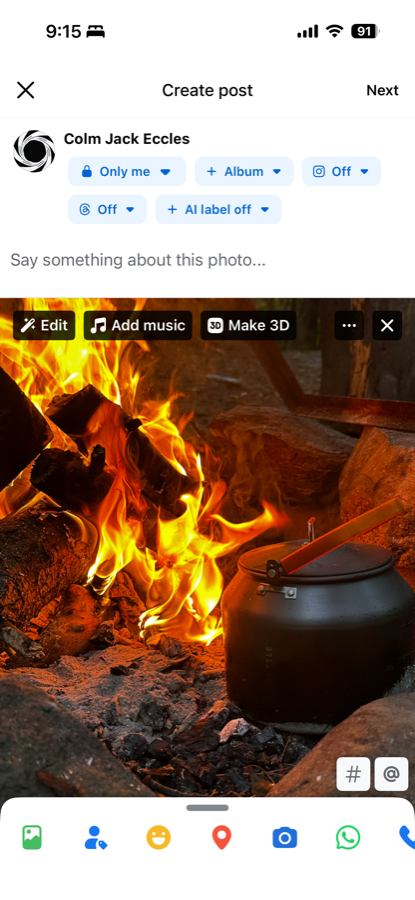
Testing 'Add music' chip on media as part of a scrappy validation test.
System Planning
The fundamental fix was changing how music worked architecturally. Instead of a media-level attribute — with multiple songs attached to multiple photos — music would become a post-level attribute. One song per post.
This mirrored the logic of other post attributes like 'Location', and aligned with how music worked on Instagram and TikTok. It simplified creation, improved the consumption experience, and would enable seamless cross-posting between formats.
Design: Feed Composer
The feed composer was a dense, legacy surface. My goal was to make music visible, accessible, and easy to add — not buried. I added a prominent 'Add music' chip directly on the media tile that appears once a user adds photos or video. This was the highest-visibility entry point I could create.
The chip and the existing toolbar entry point both open the music browser directly. Once music is selected, the chip transforms into an edit entry point. Added music is displayed in the post header — previewing the consumption experience before the post is shared.
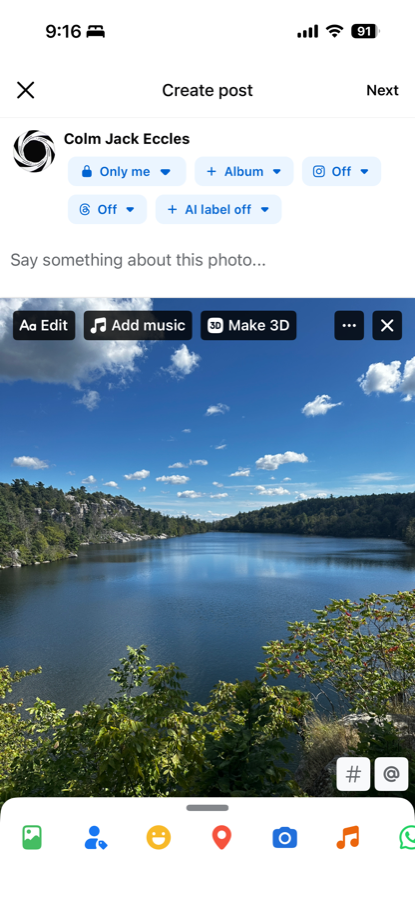
'Add music' appears after user adds media.
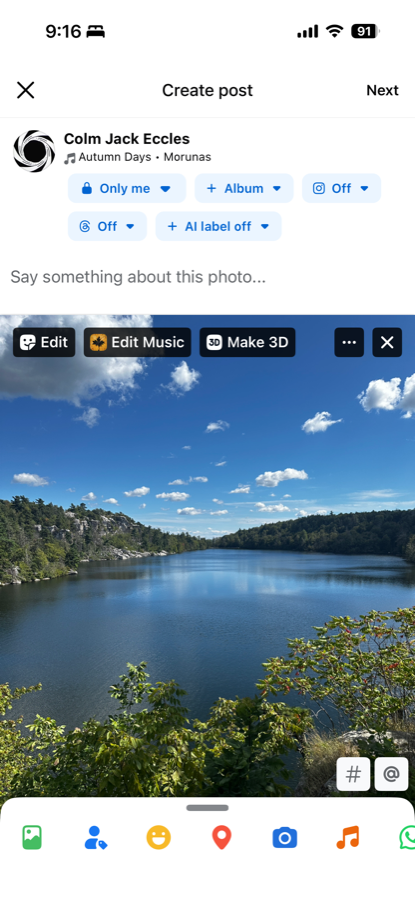
Music is added in the composer.
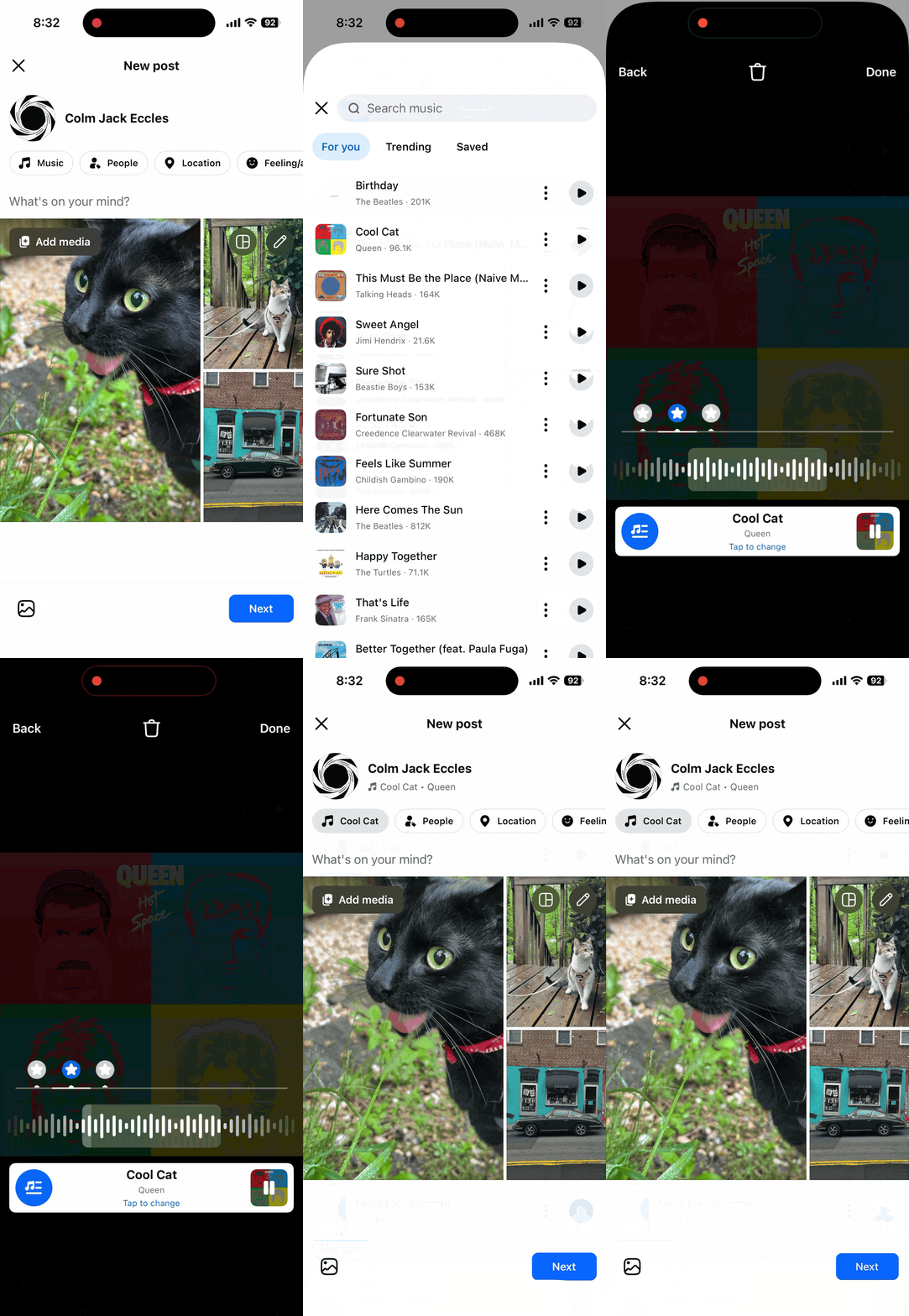
Adding music in the updated feed composer. As a key creative lever, it was placed in the first row of the toolbar.
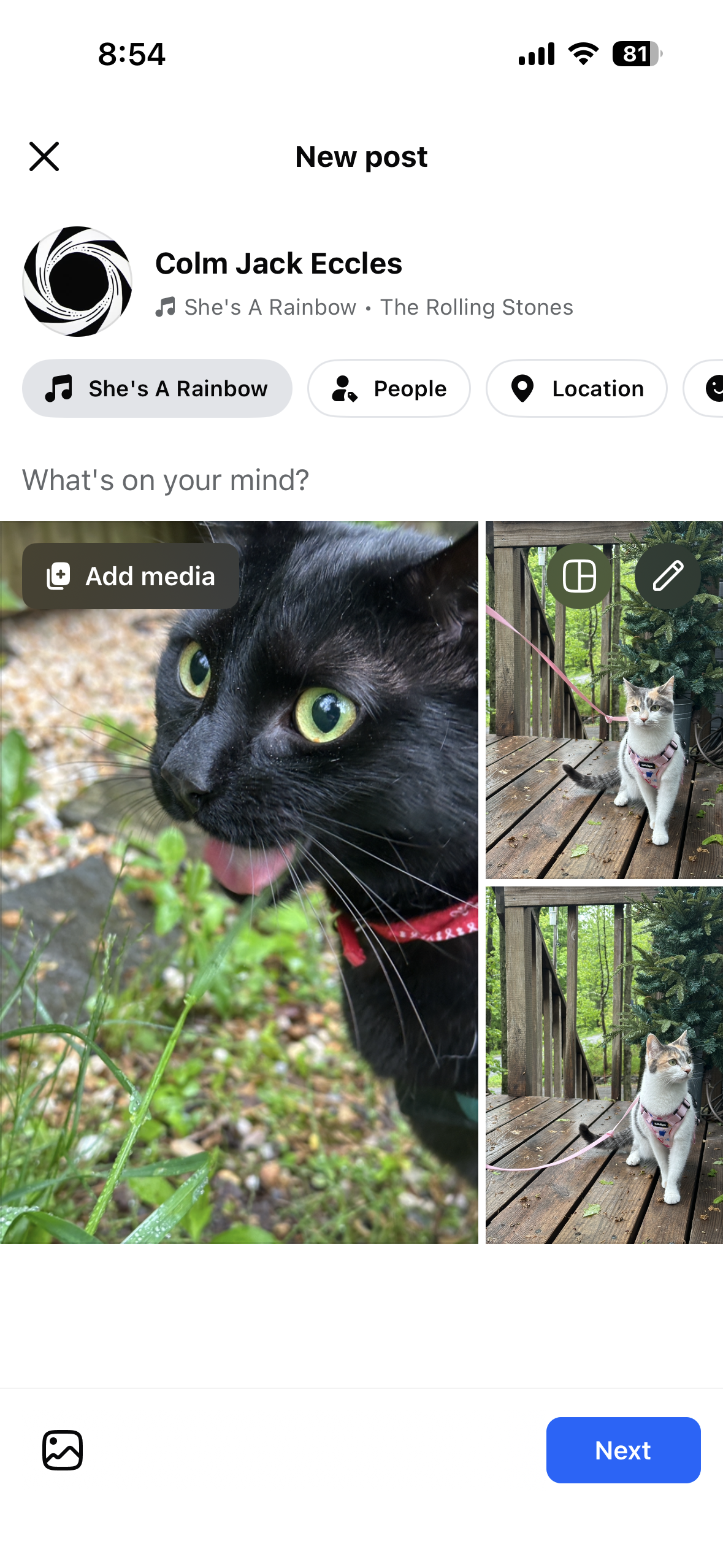
Music added in the feed composer.
Music on Text Posts
An idea I spitballed with my PM: if we already allow music on image and video posts, why not text? We proposed adding music as an attribute for all text posts, but after reviewing with leads and data science we scoped our initial launch to 'Super Awesome Text Posts' — Facebook's stylized text posts with colorful backgrounds.
This unlocked a whole new sharing format for music on feed.
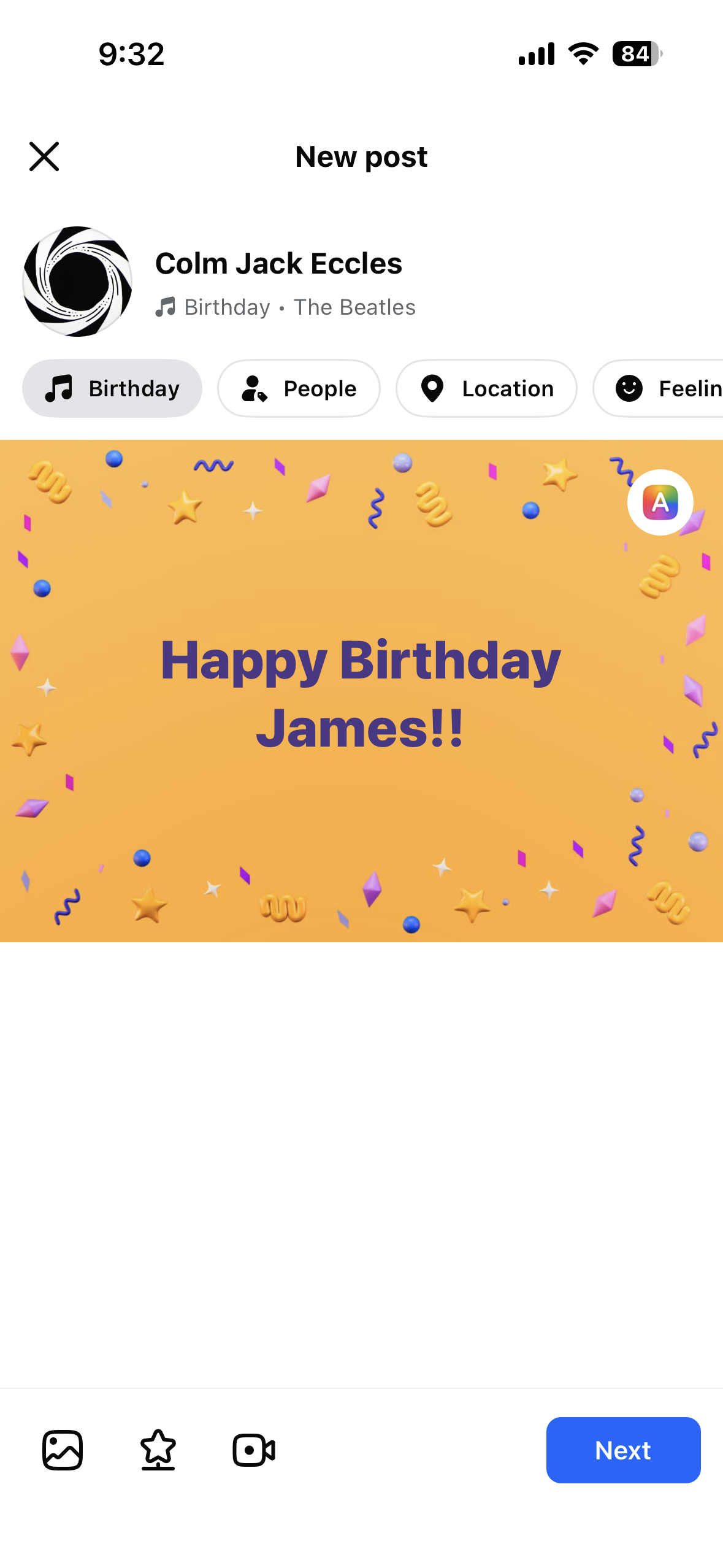
Music added to a text post (SATP).
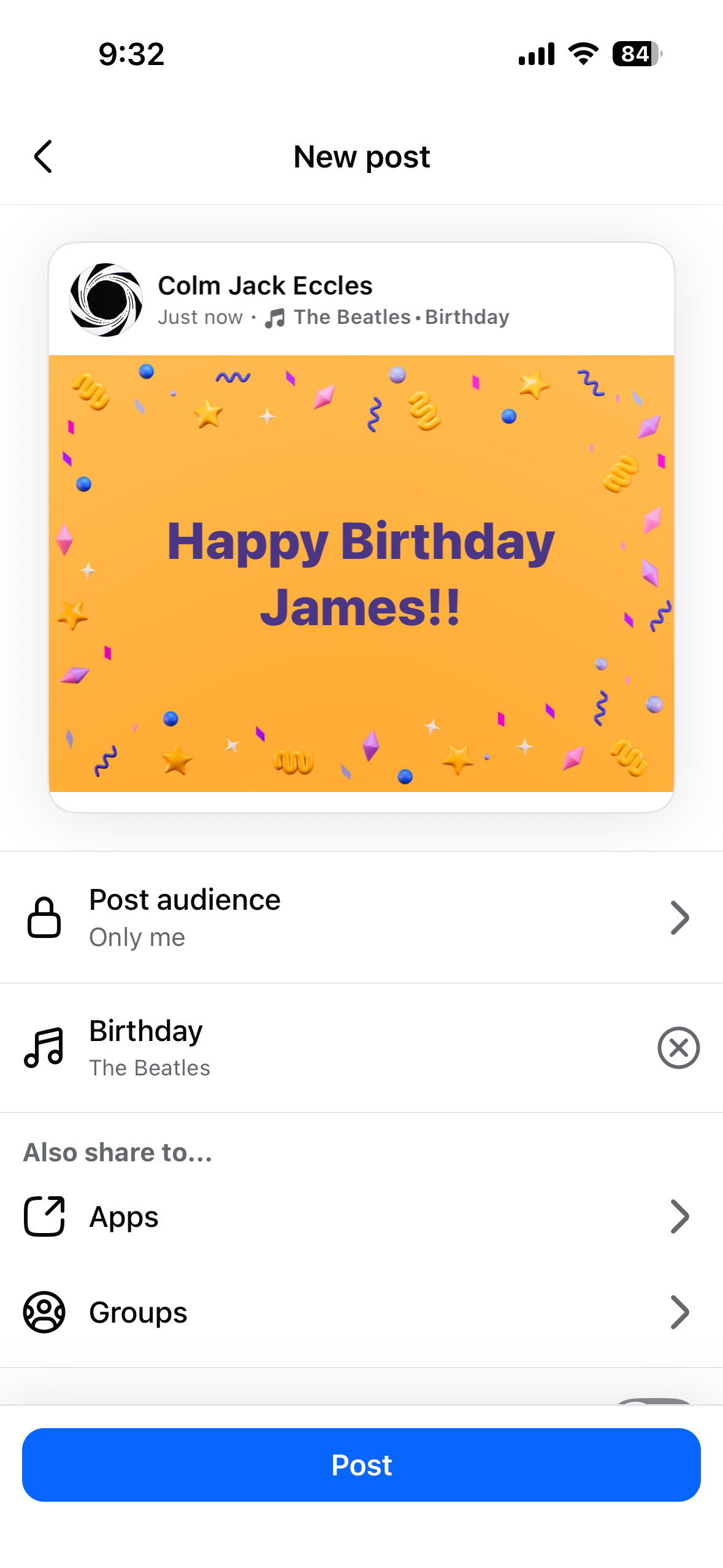
Music on SATP in the feed.
Consumption Experience
The feed is one of the most scrutinized surfaces in the world. I leveraged the existing attribution string in the post header to display the full artist and song name — previously this wasn't shown. I merged the music mute logic with video mute to create a unified global mute system across feed.
In the post detail and media viewer, I worked with engineering to ensure music plays seamlessly when transitioning between views — no restarts, no interruptions. A music bottom sheet (triggered by tapping the attribution) surfaced song info and enabled mimicry: users could save the song and create their own post with it.
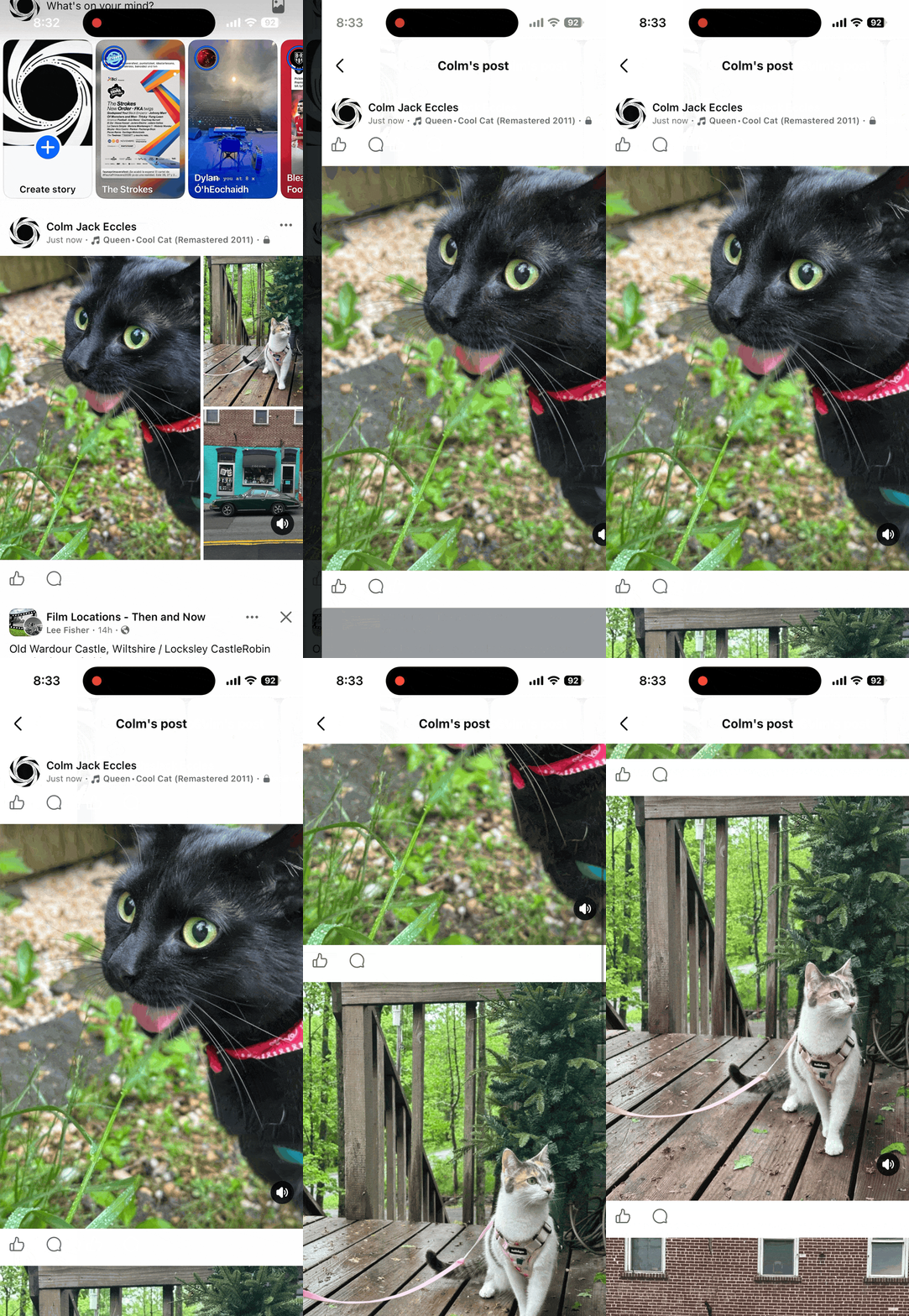
Music is added to the post header.
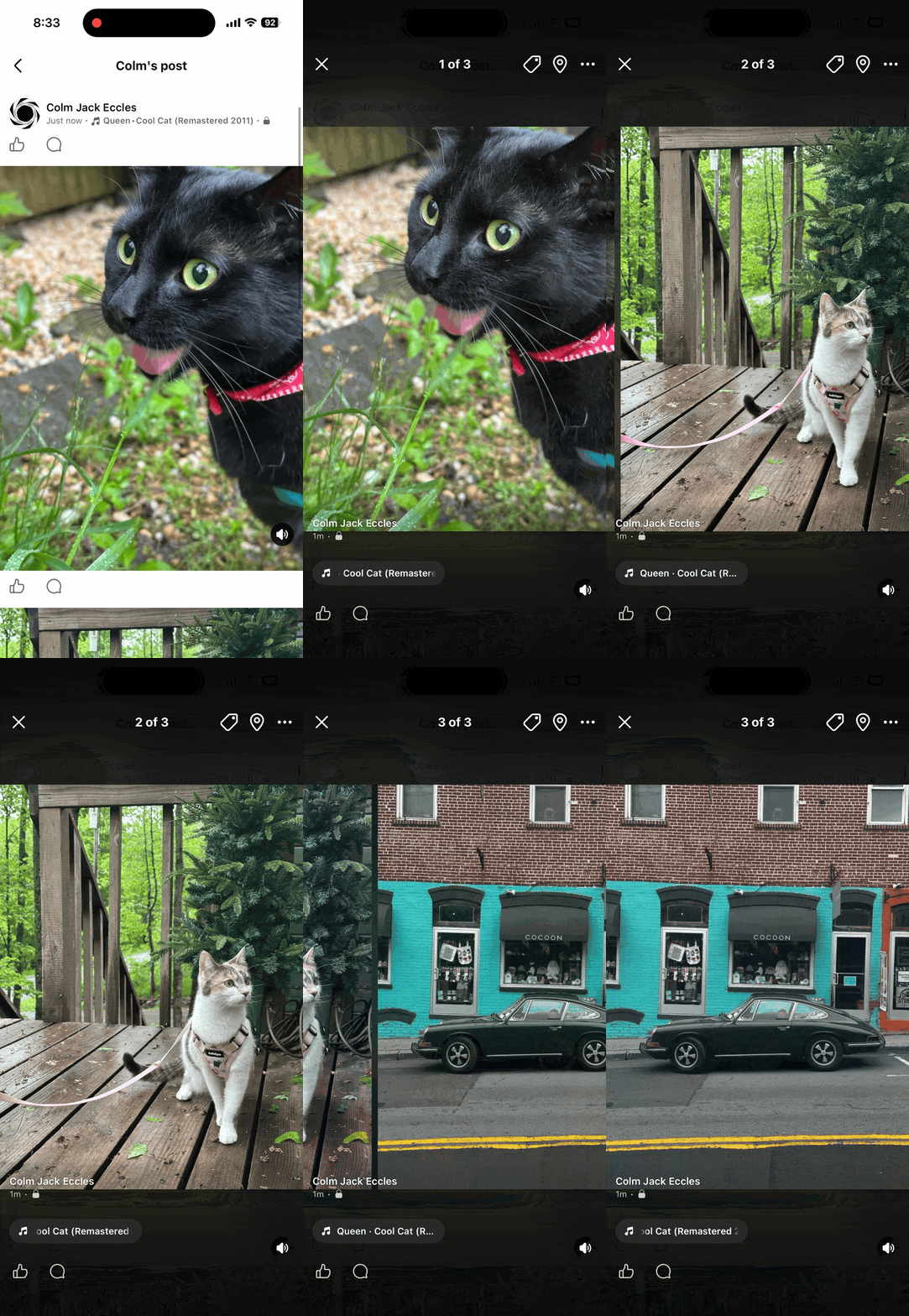
Music plays consistently through media viewers.
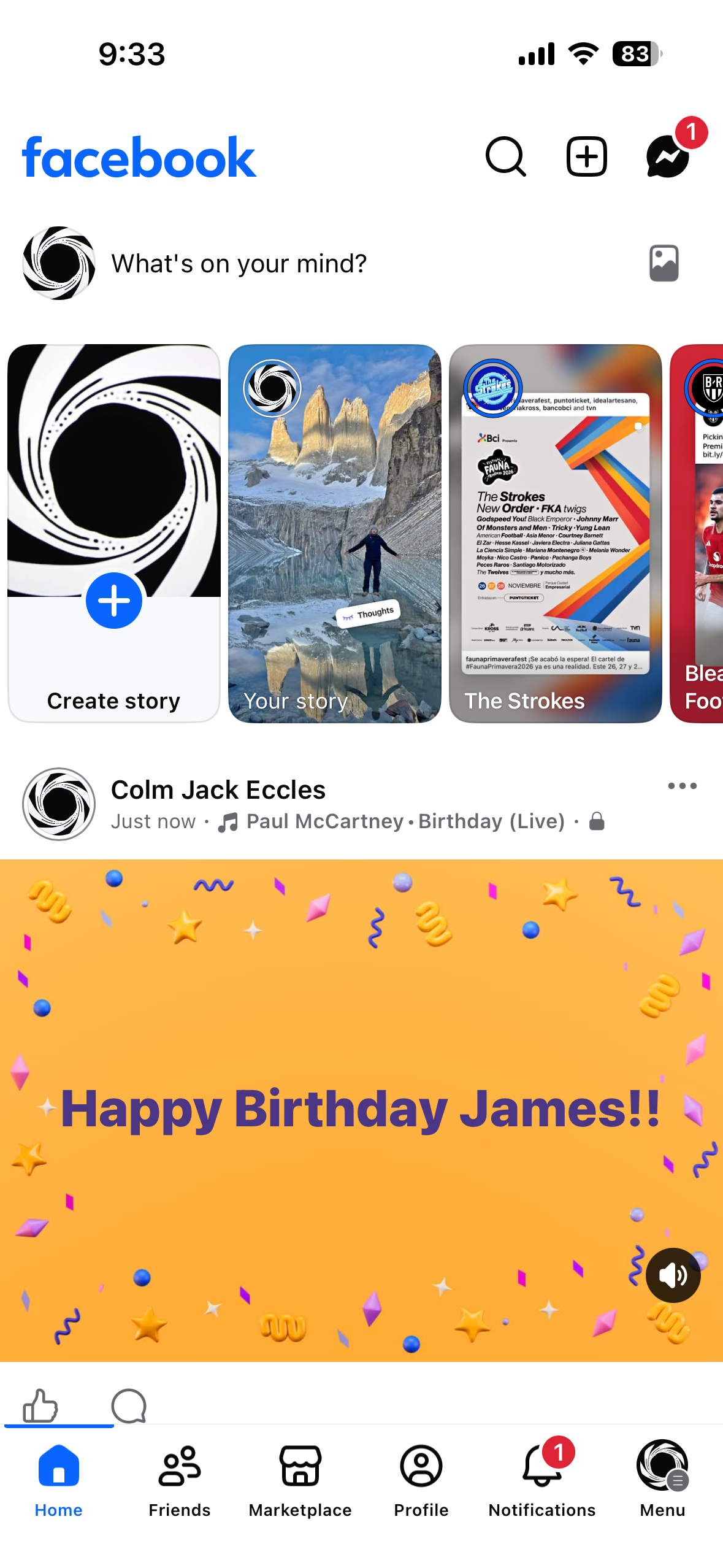
Music on text posts.
Music Mimicry
Music mimicry is when a user hears a song in a post and is then inspired to create their own post. It's essential to develop a music creation flywheel.
I included a mimicry system in the MVP experience. If a user taps the song in the post header, it opens a bottom sheet with additional actions. The user can view details, report the song and most importantly use it for their own post.
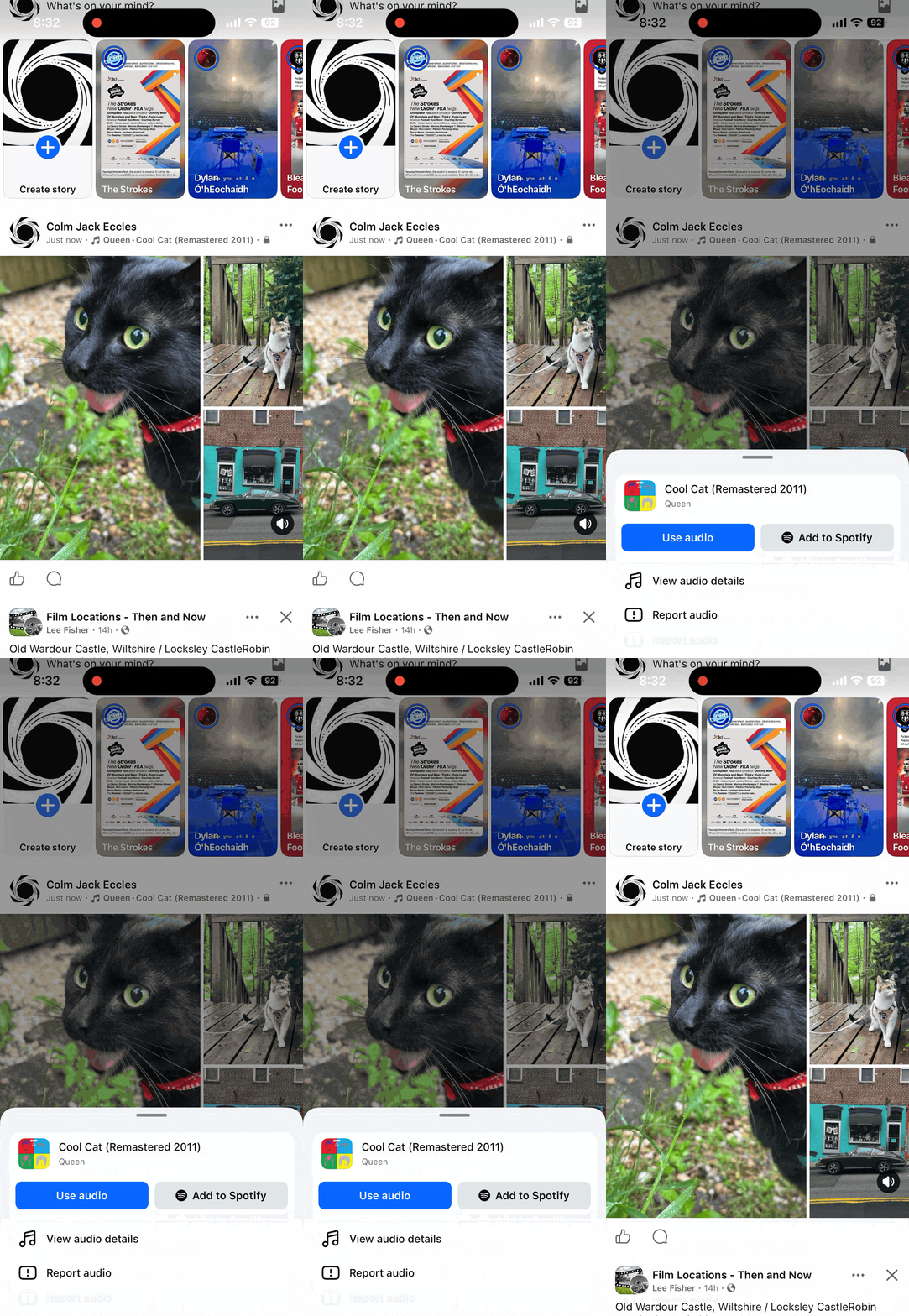
Tapping the song attribution opens a bottom sheet with mimicry actions.
Launch
Music on Feed launched in July 2025. Since then we've seen a 120% increase in music posts, a stat-sig positive lift in feed sharing, and 5M+ users posting with music daily — increasing week on week.
As part of the launch, I designed a custom go-to-market mimicry experience timed with J Balvin's single 'Zun Zun'. A 'Try it' chip appeared on posts using his song, letting users instantly share their own post with the same song and background. This generated over 1 million new posts through mimicry alone. The template is now used for future music collaborations.
Cross-posting improvements also eliminated thousands of user reports as Instagram posts with music no longer had their music stripped on Facebook.
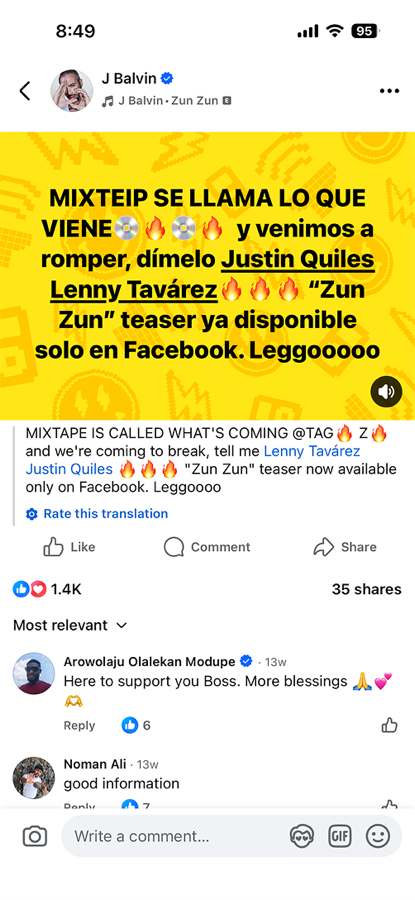
Music on Feed launch with J Balvin's new single.
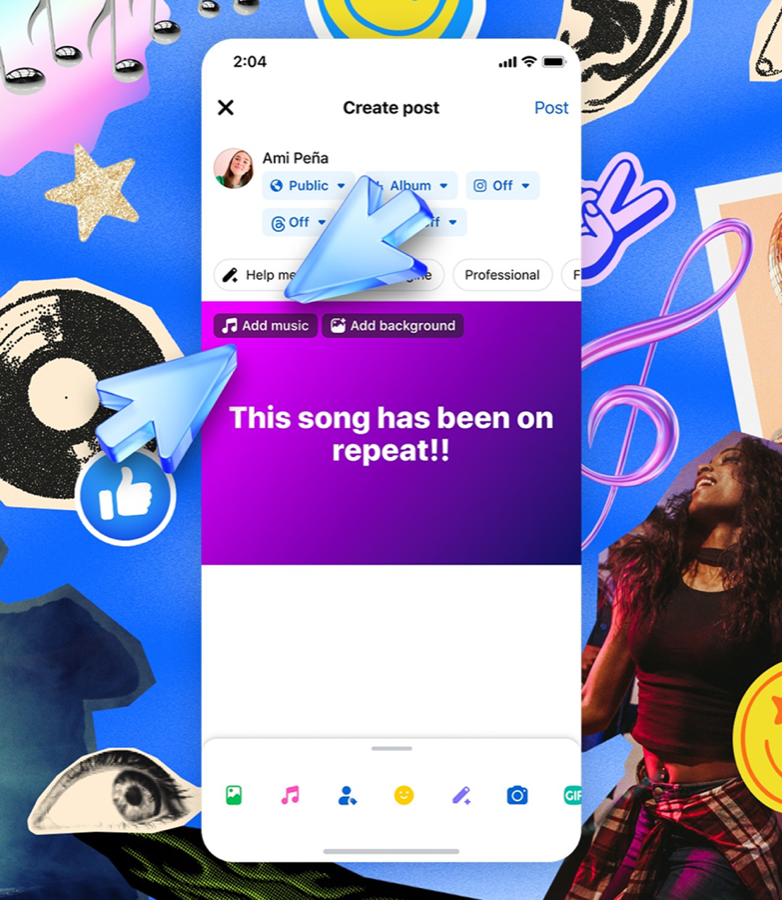
Facebook marketing image for the new music on feed feature.
Facebook marketing image for the new music on feed feature.
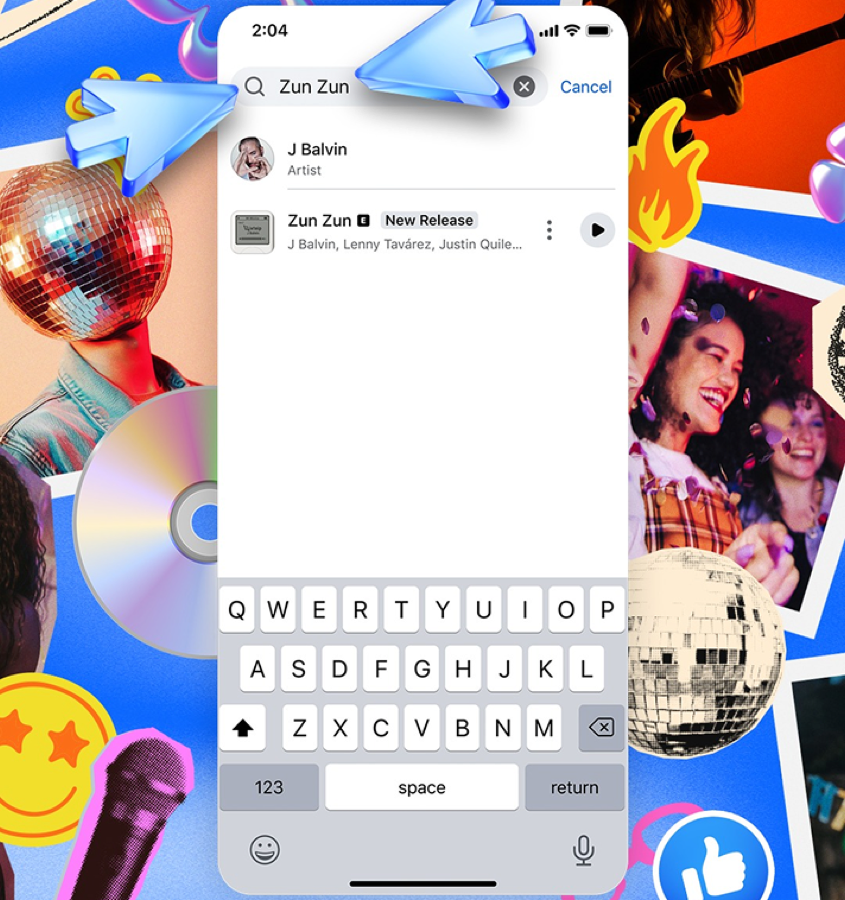
Facebook marketing image for the new music on feed feature.