No Edit
A new way to share stories in the moment — helping young adults share authentically on Facebook Stories.
The Problem
Facebook is often seen as uncool by young adults (YA), with sharing declining year-over-year. On the Facebook creation team we were given the directive to spearhead new ways to share that would resonate with YA users to reverse this trend.
Research
Our user research team (UXR) conducted in-depth research with YA users to better understand their opinions, problems and sharing habits. Key takeaways:
- YA users are leaning more and more into unfiltered, 'authentic' content.
- YA feel pressure when sharing — they don't think their content is high quality enough or interesting.
- Apps like BeReal help depressurize sharing and encourage 'in the moment' posts.
- Adding music, stickers and effects to their content is seen as 'try-hard' and 'cringe'.
Ideation
Our team dived into this research and started to ideate new concepts to address these issues. I worked with my PM and other design partners to put together a number of prototype concepts, which we sent back to UXR to test with users.
A number of these concepts received strong positive feedback, including what would later become 'No Edit'. At the time the concept was really basic but the premise was: 'What if you could share a story and show that it's authentic and unfiltered? Straight from your camera roll.' The idea that content could be highlighted as 'authentic' in some way after sharing really resonated with users. Our team aligned around the strongest ideas and I took on developing the 'No Edit' concept.
Design
The real design challenge was figuring out how to strip back the stories editing flow — despite our robust creative toolset — and let users mark content as 'unfiltered'. I explored concepts leveraging the in-app camera to enforce an 'in the moment' creation flow, and a dedicated 'No Edit' sharing flow funneling users into a stripped-down experience.
Reviewing these with data science, product and UXR partners, we identified two key drawbacks:
- A dedicated entry-point like requiring the in-app camera would inevitably see drop-off. The in-app camera had low usage — data showed users almost always shoot with their native camera.
- Users would have to learn a new tool/sharing flow and then pre-emptively enter it to create content 'in the moment'.
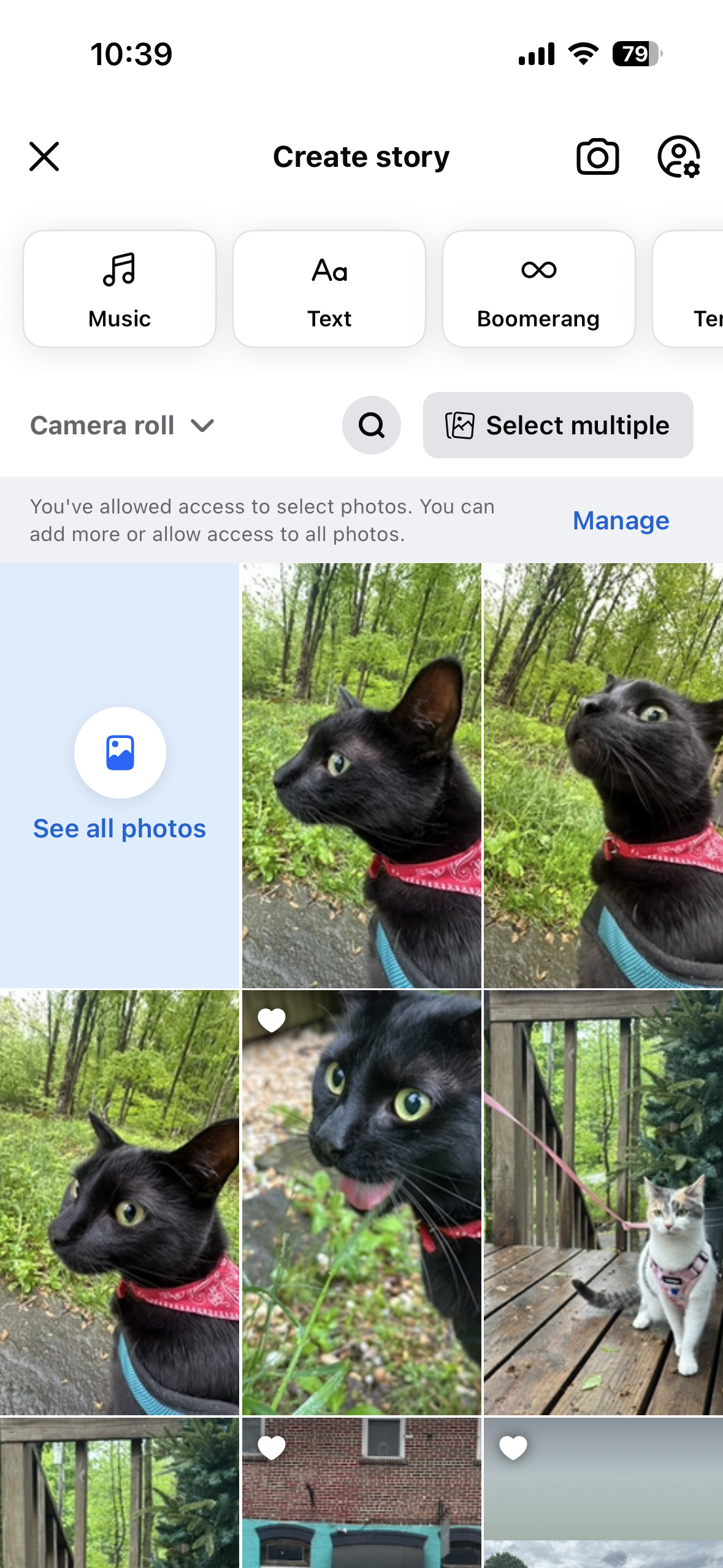
Step 1 of the standard story share funnel: Select media/tools.
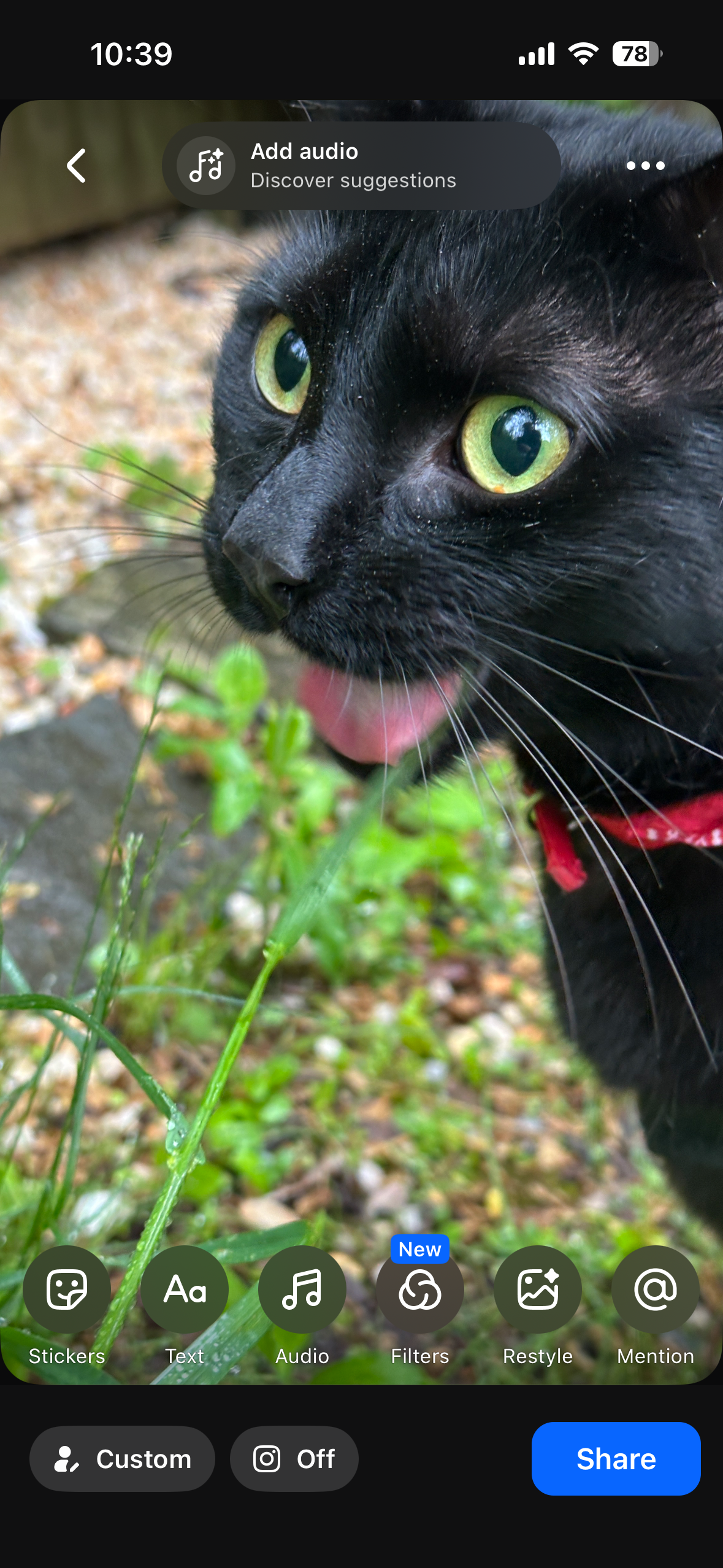
Step 2 of the story share funnel: Make edits and share.
I started to explore gesture-based actions, eventually working with a 'long-press' in the stories media gallery. At the time, long-press already existed in the gallery — but the only action it allowed was a secondary method to select media.
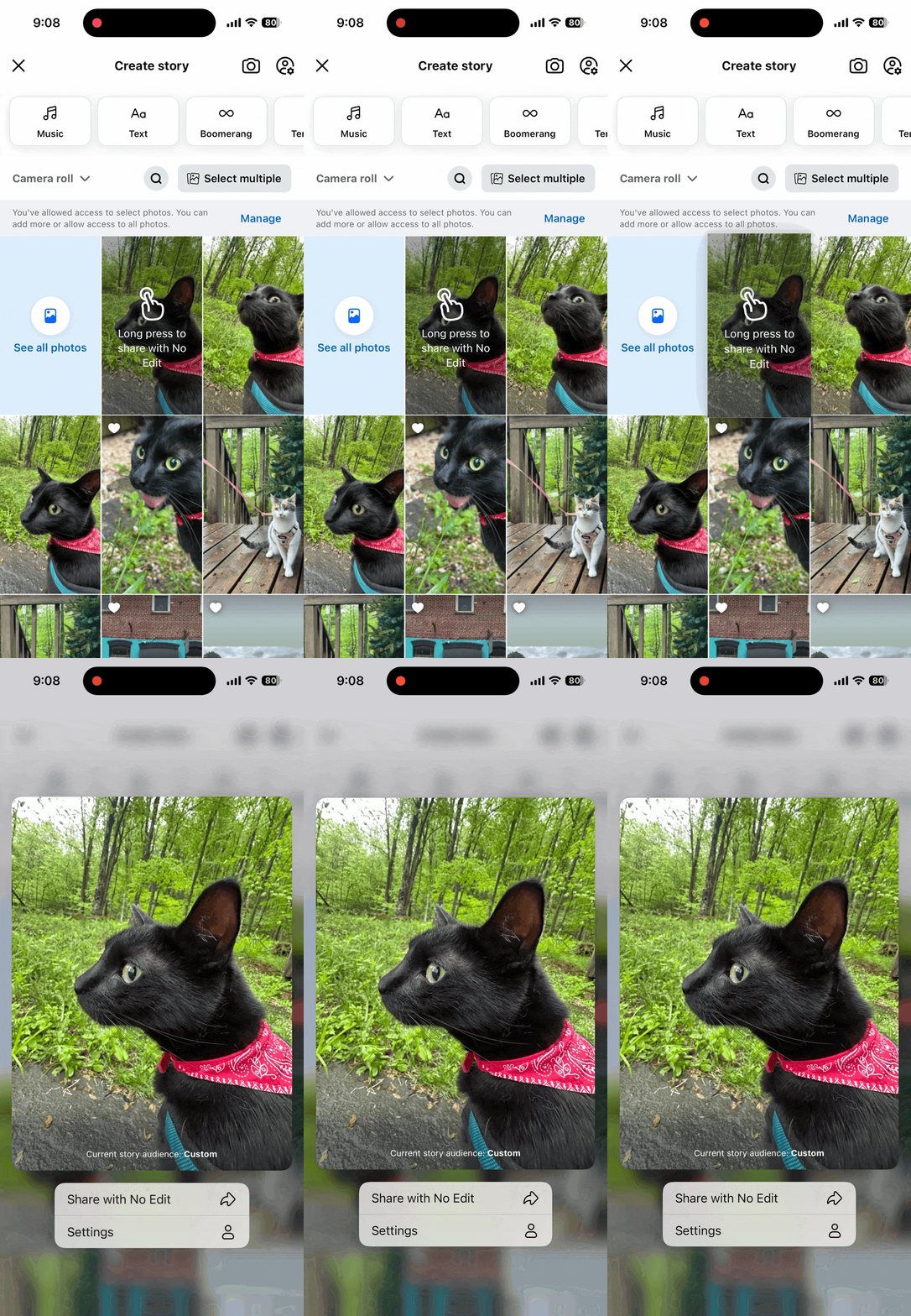
Long press was previously used only for media selection.
I realized this could be a quick, lightweight entry-point. What if we leveraged long-press so users just had to tap 'share', skipping the editing step completely? Users create content as usual with their native camera, then share via long-press on Facebook. If shared this way, we'd add a lightweight 'no edit' attribution on the consumption side for viewers to see.
The initial round of designs highlighted the importance of story privacy. Since it was so easy to share, we didn't want users to accidentally share to the wrong audience. I added a privacy string on top of the long-pressed media — highlighting the user's current story privacy setting — and a second action below the share button to access privacy settings.
During later testing this flow resonated strongly with users. Although there was some concern about accidentally sharing, the majority appreciated the 'power-user' way to expedite sharing. They felt they could share quickly and 'in the moment', and the 'no edit' attribution would act as a shield, depressurizing the need for high-quality content.
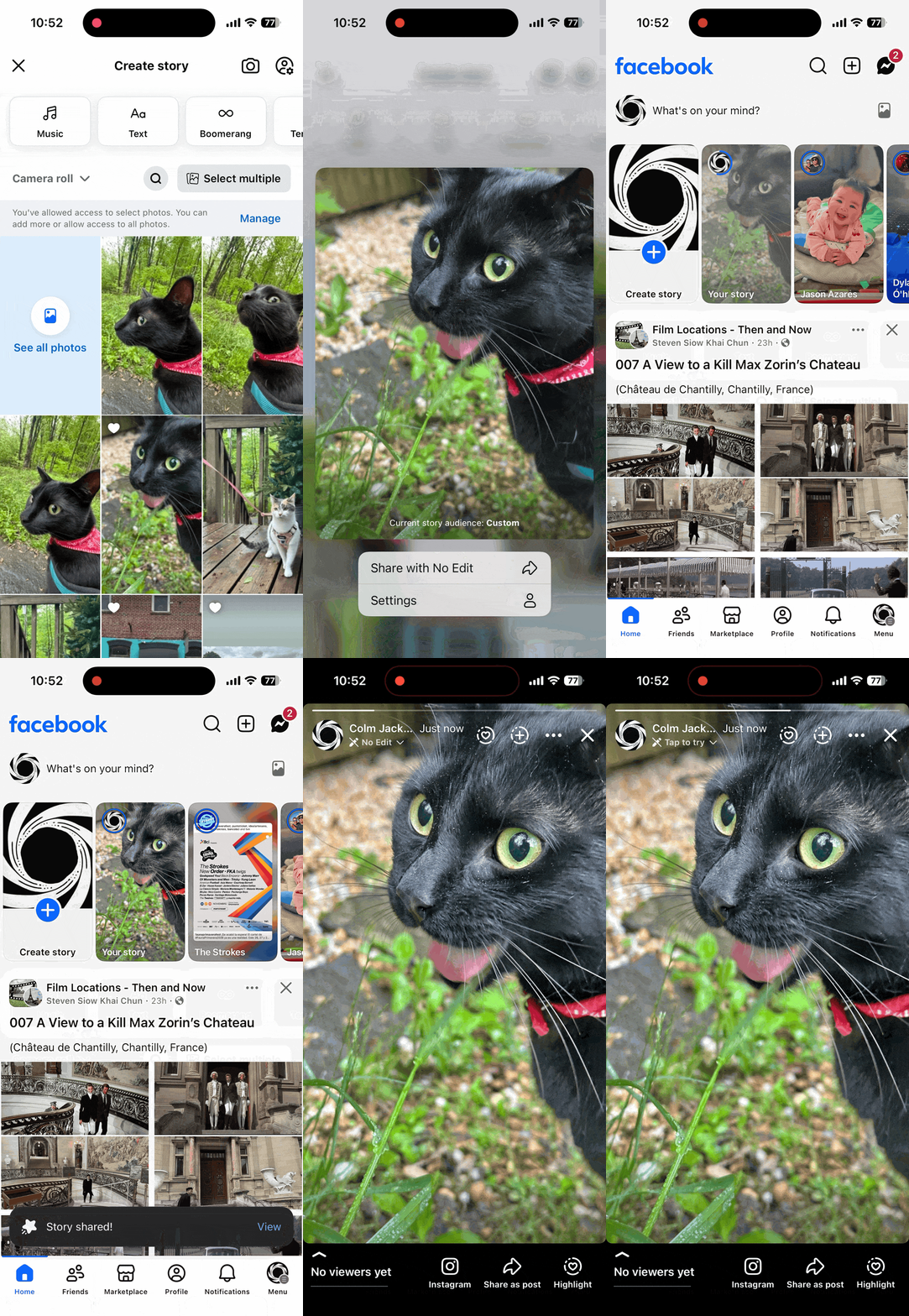
The No Edit sharing flow. Users can select and share an image in seconds.
No Edit Attribution
When users share a story with No Edit, we wanted to badge it so viewers could see the content hadn't gone through the usual editing process. I wanted to avoid adding a sticker or visual element that would take away from the content, so I opted to leverage the existing stories attribution string — simple and minimal.
Users who viewed the story could see the 'No Edit' attribution in the story header. Tapping it led them into the No Edit new user experience, creating a mimicry flywheel that drove additional awareness and No Edit creation.
*Mimicry is when a user who views a post uses an aspect of it to create their own. E.g. you see a song in a friend's story and save it to use in yours.
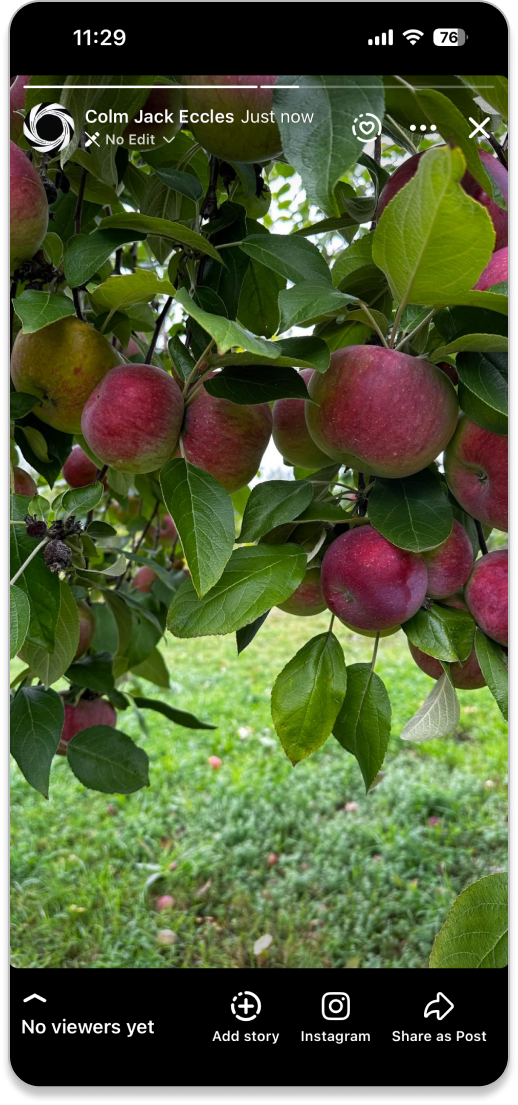
No Edit attribution in the stories viewer.
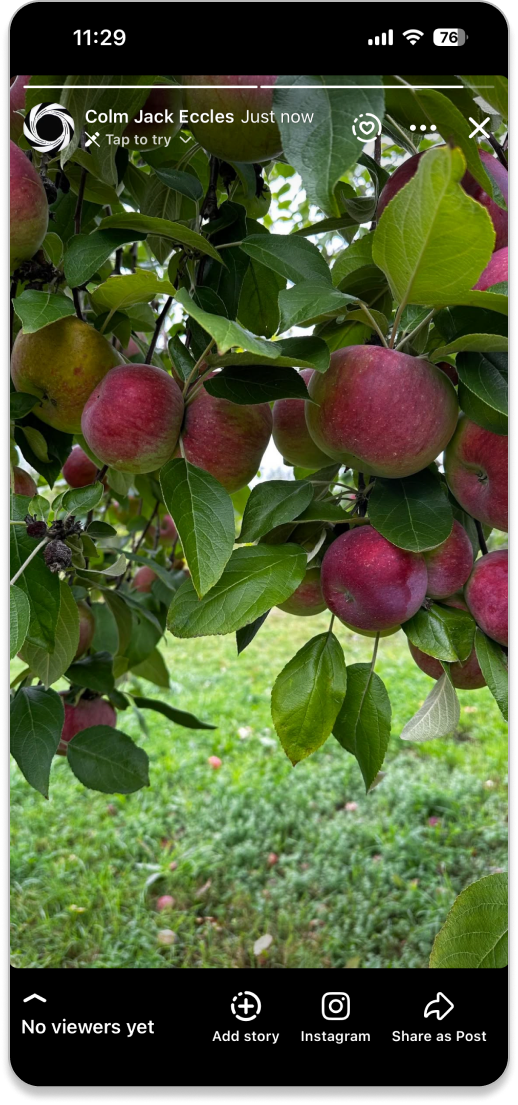
No Edit attribution in the stories viewer.
Feature Awareness
The final design challenge was feature awareness — how would users discover long-press? It's not a common action on the media gallery.
I initially explored traditional levers like a bottom sheet or tooltip appearing when users enter the gallery. However, these can be disruptive to sharing metrics, so there was hesitancy around relying on them.
Pushing further, I designed a custom 'gesture overlay' — an animated gif overlay that appears on top of the user's media. Eye-catching but non-disruptive compared to a modal. The team aligned on showing it up to 3 times in the media gallery, disappearing once the user tries long-press at least once.
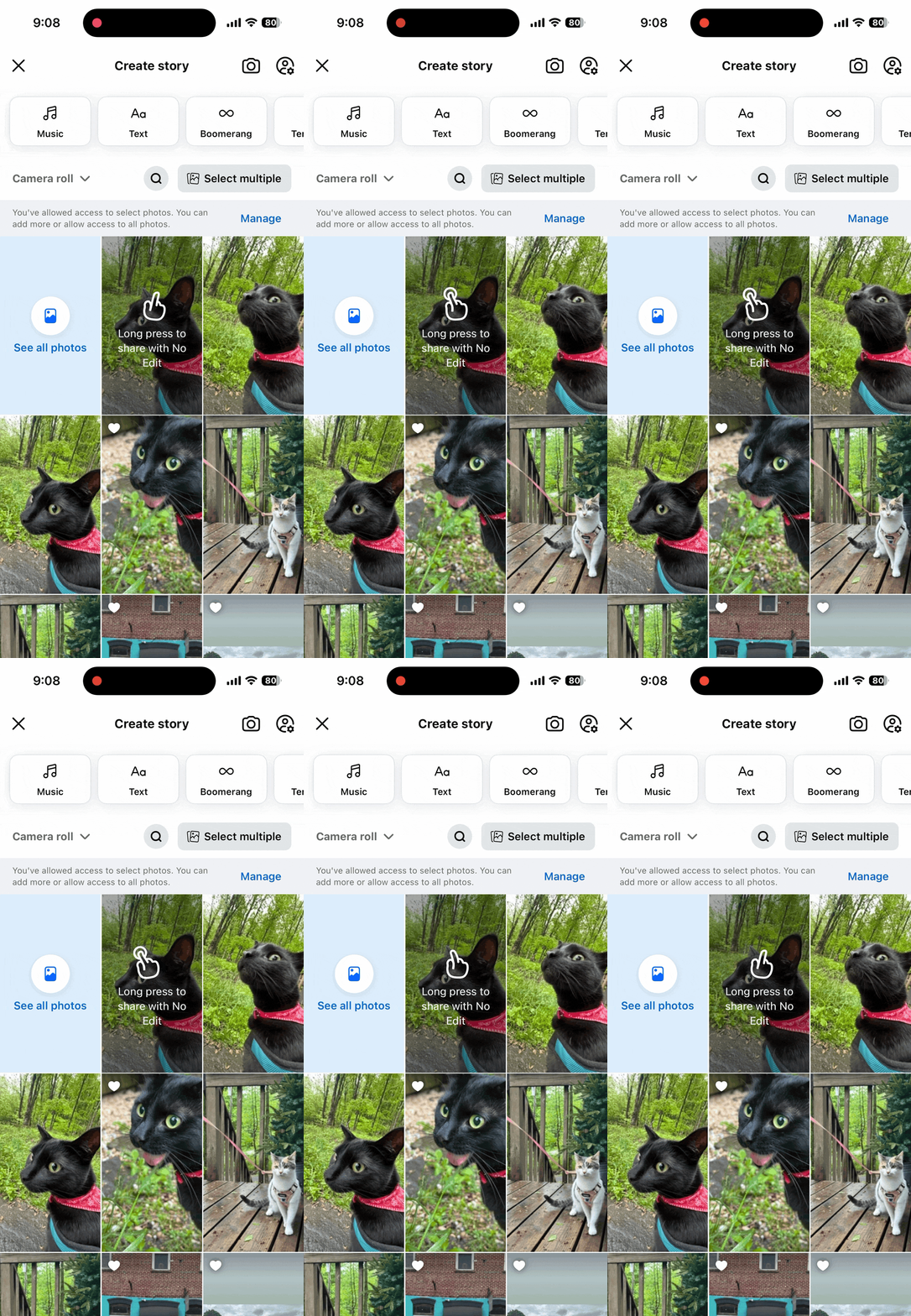
No Edit new user feature awareness overlay.
Launch
No Edit tested in Q4 2024 and showed stat-sig sharing gains for original stories, leading to a full launch in Q1 2025. Although it doesn't enforce purely 'in the moment' content, it provides users a depressurized shield for content they may feel is 'imperfect' — critical in a world where sharing publicly can be so intimidating. It's clear something in the tool resonates, as it continues to perform well since launch.